
Automation applications
Handling and conveying in production
Handling is rarely the reason for an investment and almost always the reason why it works or does not. Whether a part is reliably picked, moved and put down again decides the availability of the whole machine.

Practice
Application examples
Case studies
Case study examples
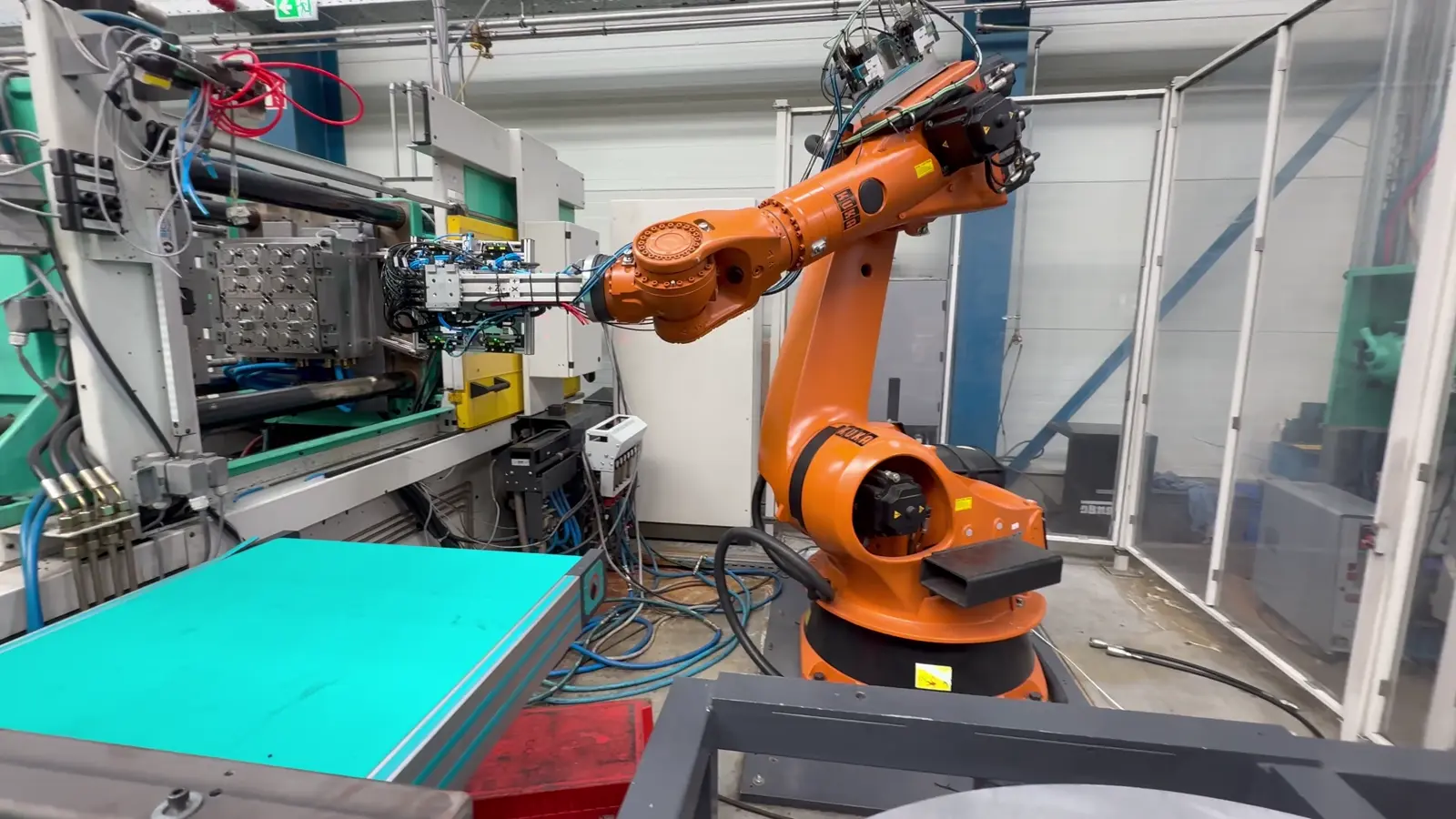
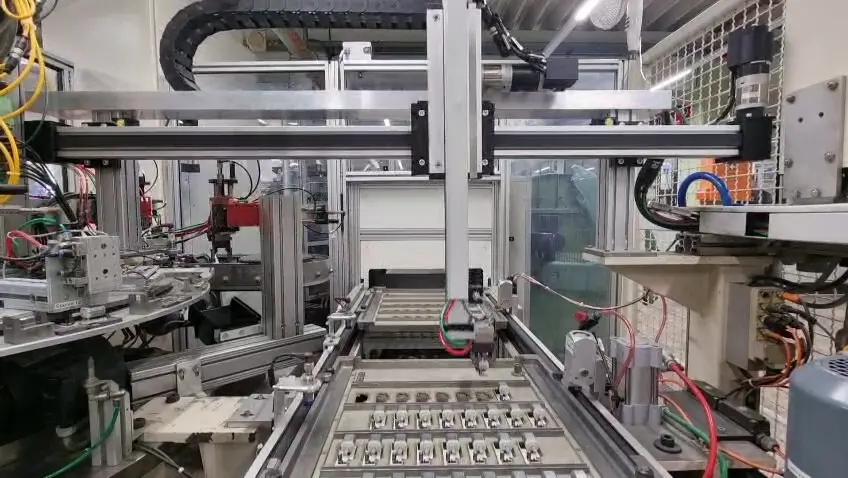
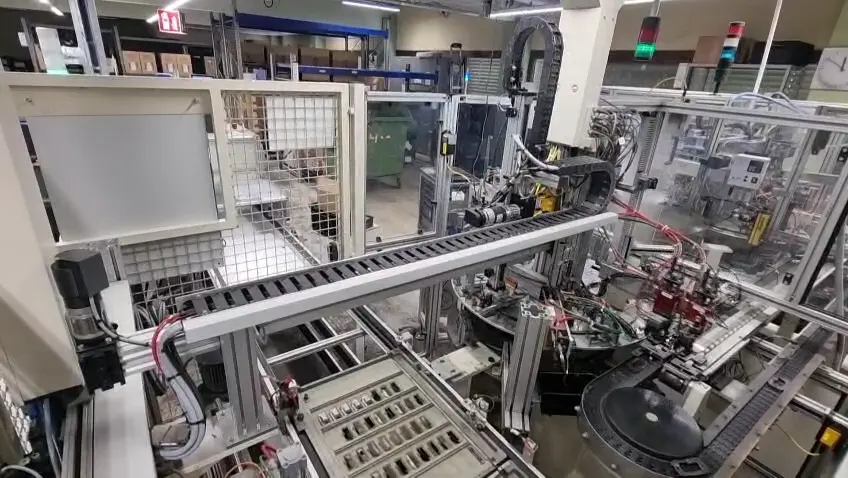
01Scope of services
What is included
Gripper technology
Selection or design of grippers for the part variants, with monitoring of the gripping state instead of trusting the cycle.
Motion axes
Linear and gantry axes for straight paths, robots for free orientation. The choice follows the path, not habit.
Conveying
Belts, roller conveyors and workpiece carriers for transport between stations, with accumulation and singulation concept.
Transfer points
The part where most handling projects get stuck: a defined position at every change of transport means.
Safety engineering
Guarding at moving axes and pinch points, based on the risk assessment.

Standards
What we work to
DIN EN ISO 12100
Risk assessment and risk reduction. Moving masses and pinch points are the typical hazards in handling.
DIN EN ISO 13849-1
Safety-related parts of control systems. Determines the performance level of the protective functions on axes and access points.
Process
How it runs
- 01
Record part and path
Mass, geometry, surface, start and destination, cycle time and number of variants.
- 02
Gripping trial
Practical test with real parts before gripper and axis system are chosen.
- 03
Concept
Axes or robot, transfer points, guarding concept, rough costing.
- 04
Build and trials
Manufacturing, programming, endurance run with real parts, including restart after a fault.
Why CheckTec
Why us
The gripper matters more than the axis
Axes are series products and they work. What stops machines is a gripper that does not hold one part variant cleanly.
Transfer points are designed in
Every change of transport means is a potential source of failure. We design those points in rather than leaving them to chance.
Restart is rehearsed
A sequence that only knows the good case costs more time in shift operation than it saves. Restart from every state is played through before delivery.
Frequently asked questions
Frequently asked questions
Robot or axis system?
For short paths and free gripper orientation the robot is usually cheaper, because it is a series product. For long straight paths or heavy loads the gantry almost always wins, because a robot with matching reach quickly costs more.
How are several part variants gripped?
Via a gripper with sufficient stroke, via exchangeable jaws or via a tool change. What makes sense depends on how often the change happens: a change per shift justifies something different from a change per part.
Can handling be built into an existing line?
Often yes. Installation space, transfer points to the existing conveyors, signal integration and whether the intervention constitutes a substantial modification all have to be checked.
Related services
Related


Enquiry
Tell us what it is about
A short description is enough for the first step. If it gets technical, we call.
Prefer to go direct? To the contact page
Step 2 of 3